29/05/2026
News
Karl Weick passed away on May 21, 2026, at the age of 89
A major theorist of sensemaking and the author of an extensive body of work, Karl E. Weick passed away on May 21, 2026. Foncsi pays tribute to all his work and to his essential contribution to industrial safety.
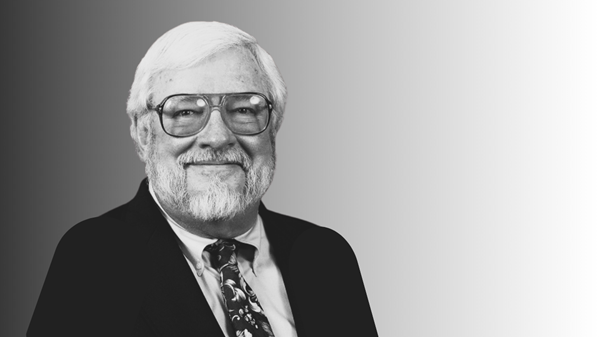
In the field of industrial safety, Weick is best known for his book "Managing the Unexpected", co-authored with Kathleen Sutcliffe, reissued and expanded several times.
However, his influence extends far beyond this book, which represents only a small part of his work. Admittedly, this body of work is not easy to grasp. First, his scholarly writings are not particularly accessible. Second, he never identified himself with a specific school or movement, even though he is often associated with High Reliability Organizations (HROs). Finally, rather than studying accidents and reliability as a research domain, he considered them as an entry point to explore broader questions about how organizations function.
His work has also had a major impact on organization studies. His ideas have been widely mobilized to analyze a wide range of issues. From a safety perspective, one might regret this relative dilution of his contributions. Yet this has had the positive consequence of making the issue of accidents more visible – and even salient – particularly among management researchers who did not have a spontaneous interest in this topic.
It is indeed through the analysis of accidents (some of which are very well known: Tenerife, Bhopal) that Weick developed his theory of sensemaking. In his famous analysis of the Mann Gulch fire, it is the sudden inability to make sense of the situation they were facing that led to the loss of the firefighters who had set out to fight what initially appeared to be an ordinary forest fire. Conversely, in the case of the Bristol Royal Infirmary, it is the persistence of an accepted (but erroneous) interpretation of events that justified disastrous interventions on newborns by surgeons who did not have the appropriate skills and resources. These two cases clearly illustrate Weick’s central theme: the relationship between actors and a reality that constantly threatens to elude them. Our relationship with reality is marked by fundamental uncertainty and ambiguity, constantly threatening our control over the course of action. However, routine, the demands of everyday action, the concern for efficiency, confidence in our abilities, a sense of control, the judgments we are exposed to, our obligation for consistency in our actions, the words we use without questioning how they are understood, the cultures in which we are immersed, past successes, future expectations, and many other factors confine us within a form of comfort built on self-evidence, banality, and continuity.
Weick describes safety as a dynamic non-event: an ongoing task consisting in ensuring that what could happen does not happen.
This task involves the effort to remain connected to the situation, avoiding both radical surprise and the collapse of sense, while also remaining wary of misleading self-evidence. As the Austrian novelist H. von Doderer writes:
Self-evidences are monsters sleeping beside us.”
At a time when technologies – especially AI – promise to make the world, if not self-evident, at least effortlessly readable, Weick’s ideas appear more relevant than ever.
Readers wishing to familiarize themselves with these ideas can consult the following documents on the Foncsi website:
A synthesis of the contribution of sensemaking theories to understanding how people react to risky situations: “The contribution of sensemaking theories to understanding risks and crises”
A review of the recently republished book that inspired Weick’s analysis of the Mann Gulch wildfire.
> The “Reading Advice” Young Men and Fire, by Norman Maclean
The French translation of the well-known article on Mann Gulch, with an introduction.
> The article “The collapse of sensemaking in organizations: the Mann Gulch disaster” (in French)
And numerous reading advice that report on work inspired by Weick’s ideas.
Finally, for an introduction in French to Weick’s work:
Vidaillet, B. (coord.) (2003), Le sens de l’action - Karl Weick : sociopsychologie de l’organisation, Vuibert, Paris, 2003.